
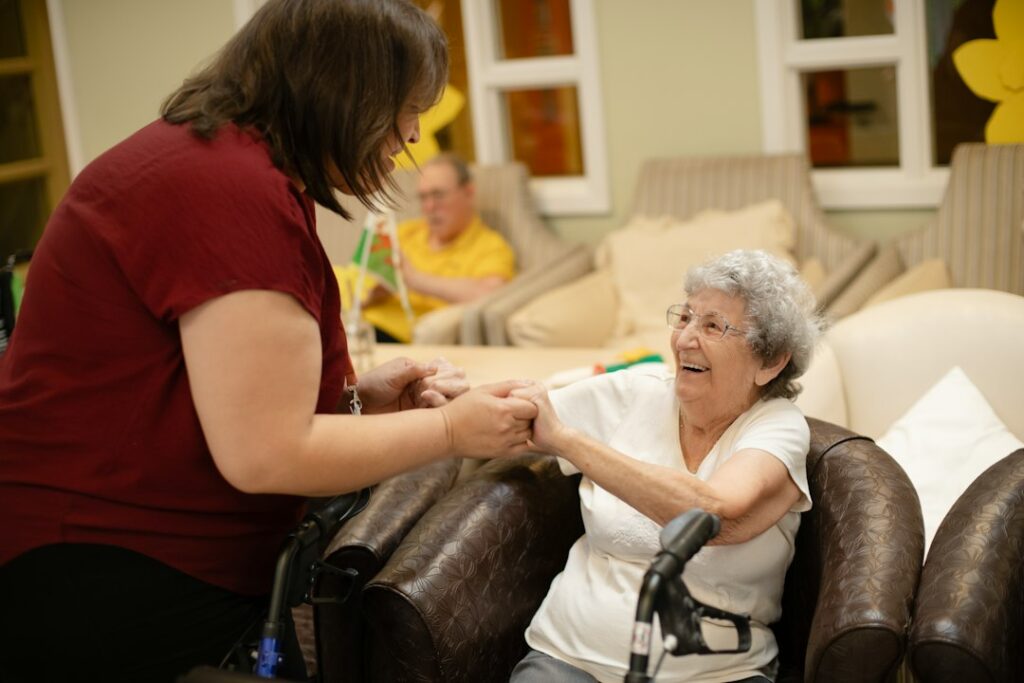
Living with dementia in assisted living requires more than reminders and supervision. Seniors often need familiar routines, calm communication, thoughtful safety measures, and support that respects their remaining abilities.
For families in Level Green, understanding how dementia care works can make visits more productive and help relatives communicate more effectively with staff. The goal is not to control every part of a person’s day. It is to reduce confusion, preserve dignity, and respond to changing needs.
What does good dementia support in assisted living include?
Good support combines personal care, emotional reassurance, health monitoring, meaningful activity, and a safe physical environment. Care should be adjusted as memory, mobility, communication, and judgment change.
A senior with dementia may need help with:
- Bathing, dressing, grooming, and toileting
- Eating and drinking regularly
- Taking medications as directed
- Moving safely between rooms
- Finding a bedroom, bathroom, or dining area
- Managing anxiety, frustration, or repeated questions
- Maintaining sleep and daytime routines
- Staying connected with family and familiar interests
Care plans should describe the person as an individual rather than only listing a diagnosis. Useful details include preferred foods, former occupations, favorite music, religious or cultural practices, usual sleep patterns, and signs of pain or distress.
How should family members communicate with a person who has dementia?
Short, calm, respectful communication usually works better than lengthy explanations or repeated corrections. Speak face-to-face, use the person’s preferred name, and allow extra time for an answer.
Helpful approaches include:
- Ask one question at a time.
- Offer two simple choices instead of an open-ended question.
- Use a calm tone and relaxed facial expression.
- Give directions in small steps.
- Reduce background noise during conversations.
- Use visual cues, gestures, or familiar objects.
- Acknowledge emotions before trying to solve a problem.
For example, saying “You seem worried. Let’s sit together and look for your sweater” may be more effective than insisting, “Your sweater is in the closet; you just had it.”
Correcting every inaccurate statement can increase distress without improving understanding. If a senior asks repeatedly about a person or event, a brief answer followed by reassurance or a change of activity may be more helpful than arguing about the facts.
Hearing and vision problems can make dementia-related communication more difficult. Properly working glasses, hearing devices, good lighting, and clear signage may reduce behaviors that appear to be caused by confusion.
How can assisted living reduce wandering and falls?
Safety planning should address both wandering and falls without unnecessarily restricting independence. Staff and family members should know the person’s walking patterns, usual destinations, triggers, and times of day when restlessness is more likely.
A safer setting may include:
- Clear paths without loose rugs, clutter, or unstable furniture
- Handrails and adequate lighting
- Contrasting colors around doors, steps, and bathroom fixtures
- Easily recognized signs or pictures
- Secure access to unsafe areas
- Regular checks for footwear, vision problems, dizziness, and medication effects
- Supervised outdoor time when appropriate
- A current photograph and contact information in case the person leaves an approved area
Pennsylvania assisted living residences and personal care homes operate under state licensing requirements related to resident safety, staffing, care planning, emergency procedures, and health services. Some residences have secured dementia care areas with additional requirements. Families should ask how a setting handles wandering, emergency evacuation, nighttime supervision, and changes in behavior.
In Level Green, seasonal conditions can also affect safety. Wet entryways, ice, snow, shorter winter daylight, and temperature changes may increase fall or disorientation risks. Outdoor walks and transportation plans may need adjustment during poor weather.
What should staff and families do when behavior changes?
Behavior is often a form of communication. Agitation, refusal, pacing, shouting, or sudden withdrawal may reflect pain, constipation, hunger, fatigue, fear, loneliness, infection, medication effects, or an overwhelming environment.
A useful response begins with observation:
1. What happened just before the behavior?
2. What time of day did it occur?
3. Who was present?
4. Was the room noisy, crowded, hot, cold, or unfamiliar?
5. What helped the person settle?
6. Was this behavior sudden or part of a gradual pattern?

Sudden confusion or a major change from the person’s usual behavior deserves prompt medical attention. Dementia symptoms generally progress over time, while an abrupt change may signal an illness, injury, medication problem, dehydration, or another urgent condition.
Physical restraints and unnecessary sedating medications can create serious risks. Families can ask what non-drug approaches were attempted, whether the person was assessed for pain or illness, and how the response will be documented and reviewed.
How can daily routines support comfort?
A predictable routine can lower anxiety, but it should not become rigid. Many people with dementia function better when waking, meals, personal care, activities, rest, and bedtime occur in a familiar sequence.
Consistency may include:
- Eating meals in the same general location
- Keeping frequently used items in predictable places
- Using familiar music or conversation topics
- Scheduling visits at times when the person is usually alert
- Allowing extra time for dressing, bathing, and meals
- Balancing activity with quiet rest
Activities should match ability rather than focus only on age. Folding towels, sorting objects, watering plants, looking through photographs, listening to music, or participating in simple food preparation may provide purpose without creating pressure to perform.
A person who once enjoyed outdoor work may respond well to nature-related activities. Someone who worked with tools, children, food, numbers, or music may appreciate adapted versions of familiar tasks.
What should families ask during care-plan meetings?
Families should receive clear information about changes in memory, mobility, eating, sleep, mood, continence, falls, and social participation. Useful questions include:
- What activities does the resident enjoy or avoid?
- What usually calms them?
- Are there new signs of pain or illness?
- Has walking ability changed?
- Are meals and fluids being consumed adequately?
- How are medications affecting alertness or balance?
- What happens during evenings or overnight?
- What would cause the care plan to be changed?
- How will family members be notified about significant changes?
Written notes from family members can help staff recognize patterns. A brief record of sleep, appetite, mood, recent illness, and successful calming strategies may be especially useful after a move or hospitalization.
How can visits remain meaningful?
Visits do not need to rely on conversation. A shared snack, quiet music, folding laundry, looking at family pictures, sitting outdoors in safe weather, or taking a short walk may be more comfortable than asking many questions.
If the senior does not recognize a relative, the relationship can still be emotionally meaningful. A familiar voice, gentle touch when welcomed, and a calm presence may provide reassurance even when names and facts are no longer remembered.
Family members should also watch for their own fatigue and frustration. Dementia care is demanding, and respectful collaboration with the assisted living team helps prevent misunderstandings. The most useful partnership focuses on specific observations, practical solutions, and the senior’s comfort rather than blame.
